



GDD in Children: Global Developmental Delay Globa...
Understanding Global Developmental Delay (GDD)
Global Developmental Delay (GDD) is a diagnosis used in children under 5 years old when they show significant delays in two or more developmental areas.
Affected Developmental Areas
Children with GDD may experience delays across several key developmental domains:
- Gross motor: Challenges with large movements such as sitting, crawling, and walking.
- Fine motor: Difficulty holding objects, drawing, or manipulating toys.
- Speech and language: Delays in speaking, babbling, or understanding communication.
- Cognitive: Challenges with learning, thinking, and problem-solving.
- Social and emotional: Difficulty interacting with others and understanding social cues.
- Daily living skills: Delays in age-appropriate self-care tasks like eating and dressing.
Common Signs of GDD
- Delay in reaching milestones like walking, crawling, or sitting.
- Not speaking or using words by the expected age.
- Poor eye contact or not responding to their name.
- Trouble understanding and following simple instructions.
- Difficulty interacting or playing with others.
Causes of GDD
Global Developmental Delay can stem from various prenatal, perinatal, or genetic factors, including:
- Genetic conditions: Such as Down syndrome or Fragile X syndrome.
- Prematurity: Complications arising from early birth.
- Cerebral palsy: Neurological conditions affecting movement and posture.
- Metabolic disorders: Conditions that disrupt the body's normal chemical processes.
- Autism spectrum disorder: Developmental differences affecting communication and behavior.
Management of GDD: Physiotherapy-Based Early Intervention
Early intervention is the priority when managing GDD. A tailored physiotherapy program helps children build the physical foundation they need to explore their world.
Detailed Physiotherapy Assessment
- Motor milestones: Evaluating head control, rolling, sitting, crawling, and walking.
- Muscle tone: Assessing for hypotonia (low muscle tone) or hypertonia (high muscle tone).
- Balance & coordination: Checking stability and movement control.
- Primitive reflexes: Monitoring developmental reflex integration.
Physiotherapy Goals
- Promote normal motor development and milestone progression.
- Prevent secondary complications, such as joint contractures.
- Improve muscle strength, tone, and posture.
- Enhance balance, coordination, and spatial awareness.
- Support independent mobility and daily functional skills.
Physiotherapy Techniques
- Neurodevelopmental Therapy (NDT): Used to facilitate normal, functional movement patterns.
- Sensory Integration Therapy: Designed for children experiencing sensory processing issues.
- Stretching & Strengthening: Targeted exercises to address spasticity or low muscle tone.
- Gait Training & Orthotic Support: Specialized training to support and encourage independent walking.
- Balance & Coordination Activities: Exercises to improve trunk control and stability.
- Therapy Ball, Wedges, & Bolsters: Dynamic tools used for core strengthening and active play.
Home Exercise Program
- Customized daily routines designed for parents to easily implement at home.
- Parent education on proper handling, carrying, and positioning techniques.
- Use of play-based exercises to keep therapy engaging and fun for the child.
Interdisciplinary Support
A holistic approach ensures all developmental needs are met by collaborating with other specialists:
- Speech therapy: To address speech, language, and communication delays.
- Occupational therapy: To support fine motor skills and activities of daily living (ADLs).
- Special educator: To provide cognitive and learning support.
- Pediatrician / Neurologist: For medical monitoring and identifying underlying causes.
Why Choose Physiotherapy First?
“Movement is the foundation for all development. A child who can sit, explore, and move confidently will engage better in communication, learning, and play.”
For more details, visit Dr. Physio for your child's development.
#AhmedabadPhysiotherapy #GujaratKidsCare #AhmedabadChildClinic #ChildPhysioAhmedabad #AhmedabadTherapyCenter #AhmedabadParents #AhmedabadDoctors #AhmedabadPediatrics #PhysioForKidsAhmedabad #DevelopmentalTherapyAhmedabad
Related Posts
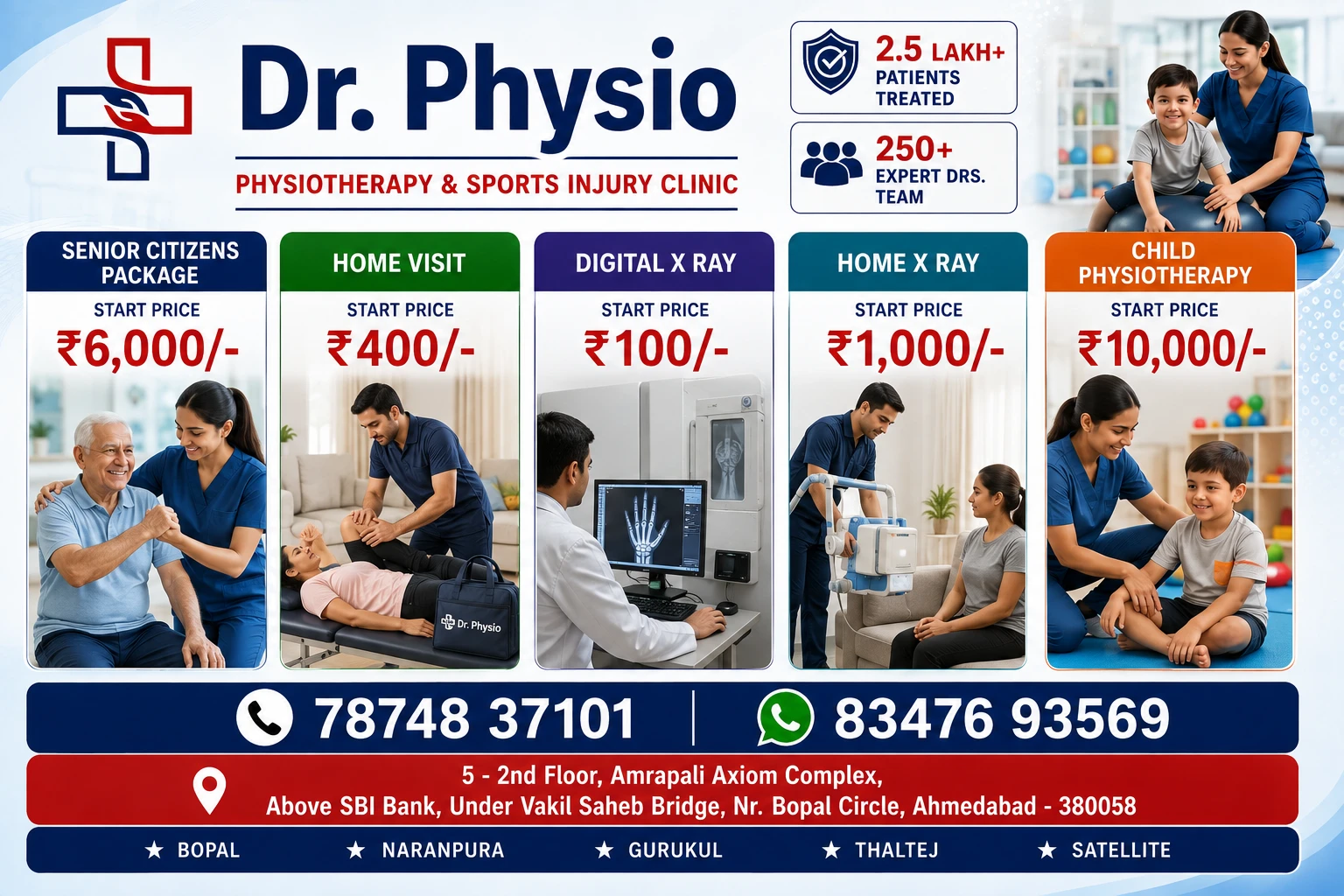
Physiotherapist Near Me – Home Visit Physiotherapy Ahmedabad
Excerpt (Short Summary): Home Physiotherapy & Home X-Ray Services in Ahmedabad — physiotherapy at home, home visit physiotherapy, home rehabilitation, sports injury physiotherapy, post-surgery physiotherapy, pain relief, senior citizen physiotherapy, child physiotherapy, digital X-ray and home X-ray service in Bopal, South Bopal, Shela, Ghuma, Shilaj, Thaltej, Satellite, Prahlad Nagar, Bodakdev, Vastrapur, Gurukul, Naranpura, Navrangpura, Paldi, Ambawadi, Jodhpur, Makarba, Sarkhej, Gota, Sola, Science City, Chandkheda, Motera and SG Highway, Ahmedabad.
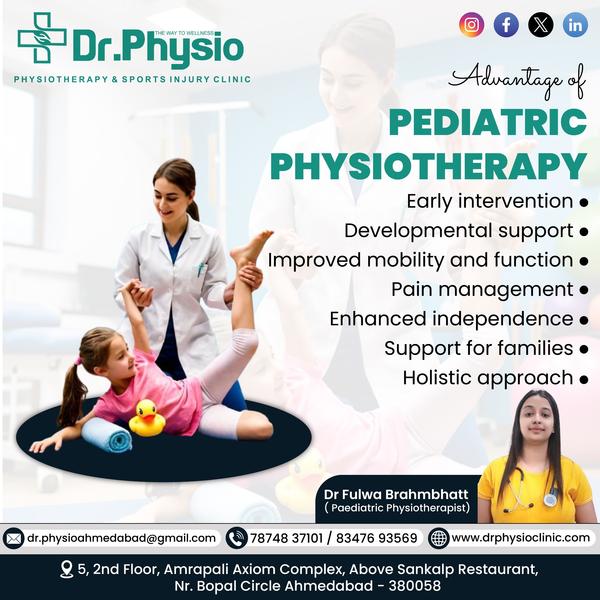
child’s physiotherapy
I am extremely satisfied with my child’s physiotherapy sessions here. What I really appreciate is that they don’t just focus on therapy, but on the ov
Need Expert Physiotherapy?
Book a consultation with our experienced team to get personalized treatment and start your recovery journey today.
Book an Appointment